Tracking Cheetahs: Early Morning Hunts in Serengeti & Mara
"The cheetah is not a creature of the thicket or the deep forest; it is a ghost of the open plains, visible only to those who know where the grass meets the horizon."
If you are looking for a cheetah, you cannot simply drive into any national park and expect a sighting. Unlike lions that may lounge near a watering hole, cheetahs require vast, open visibility and specific scrubland environments to utilize their speed.
Key Takeaways * Habitat is everything: Successful sightings require open grasslands or vast savannas with scattered cover, not dense bush. * Target specific regions: High-probability areas include specific plains in East Africa and certain southern regions.
* Timing is tactical: You must align your arrival with the dry seasons and specific early-morning windows to catch them in action.
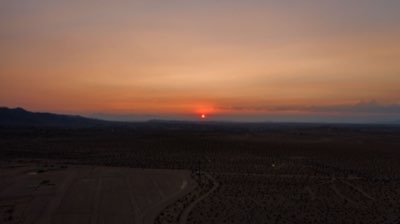
Where can I find cheetahs in the wild? The sun hits the cracked earth of the Serengeti plains at 6:00 AM in early 2026, casting long, thin shadows across the golden grass. A single, spotted shape breaks the horizon, moving with a silent, rhythmic grace that differs entirely from the heavy gait of a lion.
Cheetahs are highly specialized hunters that rely on sight and speed rather than brute strength. Because of this, they do not thrive in the dense, tangled vegetation where leopards hide or in the heavy riverine forests where hippos congregate.
Instead, they require vast, landscapes—specifically vast savannas and semi-arid grasslands—that allow them to spot prey from a distance and utilize their legendary sprint.
While many safari-goers look for the "Big Five," the cheetah occupies a much more specific ecological niche. A lion can live in a forest, a desert edge, or a grassland; a cheetah is almost strictly bound to areas where visibility is high.
If the brush is too thick, their primary advantage—the chase—is neutralized. This biological requirement means their range is often more fragmented and sensitive to habitat changes than larger predators.
But even in the perfect habitat, finding them is not as simple as looking for a moving shadow.
Which countries are the best for a cheetah safari? A dusty Land Cruiser bounces along a dirt track in the Masai Mara in July 2025, the engine idling quietly as the guide scans the vast expanse of the Kenyan plains. The guide doesn't look at the trees; he looks at the movement of the grass.
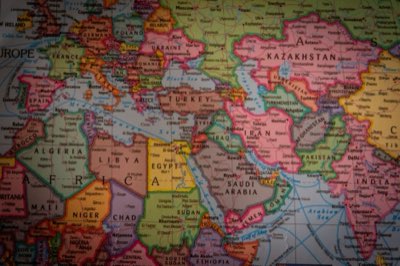
When planning a trip specifically to find these cats, East Africa remains the premier destination. Kenya and Tanzania offer some of the most iconic cheetah habitats in the world. In the Masai Mara of Kenya, the vastness of the plains provides the perfect stage for cheetah hunting.
The visibility in these regions is often superior to the denser thickets found in parts of South Africa's Kruger National Park.
In Tanzania, specifically within the Serengeti ecosystem, the sheer scale of the landscape provides the vastness these predators need.
While South Africa offers incredible wildlife density, the habitat is often more varied and can be much denser, making cheetah tracking more difficult compared to the sweeping plains of East Africa. Travelers should look for parks that manage large tracts of open land.
Logistics in these regions often involve flying into bush airstrips to reach remote lodges, ensuring you are positioned in the heart of the habitat rather than on the outskirts.
However, even in these vast spaces, timing can make or break your entire expedition.
Timing is Everything: When to Hunt the Cheetah
The air is cool and crisp at dawn in August 2025, and a light mist hangs over the ground, obscuring the view of the distant hills. A small group of gazelles grazes nervously, their ears twitching at every rustle in the grass.
To maximize your chances, you must synchronize your visit with the dry seasons. In many parts of East Africa, the dry season (typically between June and October) results in shorter grass. This reduced cover makes it easier for both the predator to spot prey and for the tracker to spot the predator.
Shorter grass is the cheetah's greatest tactical advantage.
Beyond the season, the time of day is critical. Cheetahs are primarily diurnal, meaning they are active during the day, unlike many other large cats that are nocturnal. The most successful sightings often occur in the early morning or in the late afternoon.
During the heat of the midday sun, cheetahs often retreat to the shade of an acacia tree to rest. If you are looking for an active hunt, the early morning hours are your best window, as this is when they utilize the cooler temperatures to hunt before the heat becomes too intense.
But once you are in the right place at the right time, how do you actually find them?
Beyond the Basics: Maximizing Your Tracking Success Rate
A seasoned guide sits quietly in the passenger seat in the early morning of 2026, his eyes scanning not for the animal itself, but for the subtle "tells"—the way a bird flies off a mound or the unnatural stillness of a patch of grass.
Success in tracking a cheetah requires a different mindset than a standard safari. You are not looking for a massive animal that crashes through the bush; you are looking for a camouflaged specialist. This is why guiding expertise is the single most important factor in your success.
A guide who understands cheetah behavior—knowing how they use termite mounds as lookout posts or how they utilize specific wind directions—is worth more than a luxury vehicle.
Your choice of vehicle and tour style also matters. High-end, open-sided safari vehicles are preferred because they allow for better visibility and easier movement for photography. However, the most important tool is patience.
When I tried this in the Mara back in 2025, I realized that my biggest mistake was moving too quickly. I sat in silence for 45 minutes before I realized a "rock" in the distance was actually a resting cat.
Unlike the Big Five, which can often be found through sheer luck at a watering hole, a cheetah sighting requires persistence. You may spend days scanning the horizon before catching that single, spotted silhouette.
| Factor | Lion/Leopard Tracking | Cheetah Tracking |
|---|---|---|
| Primary Habitat | Thick bush, forests, waterholes | Open savannas, short grasslands |
| Peak Activity | Nocturnal / Crepuscular | Diurnal (Daytime) |
| Visibility | Often hidden in cover | High visibility required for hunting |
| Success Rate | High (often easier to find) | Moderate to Low (requires specialized skill) |
How to Prepare for a Cheetah Safari
- Research the Biome: Ensure your chosen destination features vast, open plains rather than dense scrubland.
- Book an Expert Guide: Specifically request guides with experience in "special interest" wildlife tracking.
- Plan for the Dry Season: Aim for the months when grass is short and visibility is at its peak.
- Pack High-Quality Optics: Bring powerful binoculars and long-range camera lenses to spot camouflaged cats from a distance.
- Build in Buffer Days: Do not book a tight itinerary; allow extra days in the region to increase your cumulative sighting probability.



Comments 0